Saturday, 28 July 2007

Lucas

Johanna needs to buy Lucas and his brothers some clothes for school. Lucas is a little boy of 9 years old that "Raising Malawi" supports. His story is tragic. On his way to the market, he was knocked down, taken away… and had his genitals cut off for black magic purposes. He survived.

Here he is, posing with his big brother. They both very excited about the pockets of their new trousers…


Children from where Lucas lives. They are looking at themselves on Johanna's camera. Priceless!

Friday, 27 July 2007

A beautiful day

Today is the last Friday of the month… The relatives can visit their babies. Some of them come from very far... And it has a cost too. They don’t meet their children at the nursery but at the Social Services. Once they arrived there, they give their names and someone calls the nursery… Today we take Mary, Joseph, Delori, Chisisi, Prince, Peter, Innocent, Theresa and Shalone… They all dressed up. I feel very excited for them.


When the car enters the parking lot, I’m too busy juggling with the 3 babies that I have been given to notice the parents running towards it. When I raise my head, there are hands everywhere… They want their babies. I can see a lot of emotion, especially in Innocent father’s eyes. I’ve been said that Malawian men don’t really care about their children – it’s a women’s matter… It’s so not true. The daddies are clumsy. It’s so touching. I show Innocent’s dad how to hold the bottle.

I don’t want to disturb them… to be an intruder. I only take a few pictures…

Joseph looks very happy in his auntie’s arms. He may go back to his village very soon. Looking at them, it’s the way it should be. Life might be tough for them but love will ease it. What a beautiful day.

Thursday, 26 July 2007

Madalitso

This morning Madalitso has to go to the hospital for her check-up and to renew her prescription… She’s in perfect health. I ask Anna about her future… No parents. Her grandmother wants her back even with her condition (HIV positive). But she’s quite an old lady and Madalitso has to take her medication twice a day at an exact time. If she misses it, her immune system goes down and becomes very vulnerable. Anna thinks that with her grandmother, Madalitso’s chances of survival are pretty low. If the grandmother doesn’t change her mind, the only option will be to take the matter to court… She’s so beautiful and alive. It breaks my heart…

Today is also Anna’s farewell. Anna is the nurse and she is transferred to the Crisis Nursery of Mzuzu. The ceremony is quite…intense. There are speeches, prayers – a lot of prayers, songs… They translate everything for me. It’s nice of them. They make me dance. I go to Shoprite (supermarket) with Davison. I want to buy some cakes and drinks… They are so happy when I come back. I even have to pose with the cake…


Anna is the lady on the right. One friend carries her bag, another her basket and another her present... That's was a nice day.

On my way back, there is a truck blocking the road. I have to walk to Kumbali Lodge. The village's kids follow me. A courageous one shakes my hand... They all want to touch me now. It's funny. I take some pictures with my digital camera and show them to them. It's enough to make them happy...

Wednesday, 25 July 2007

Bekial

It’s cloudy and cold when I wake up… I feel tired. I don’t understand why. We are so exhausted by our days that we never stay up late at night… I do work much longer hours in London… But what we do is quite emotionally draining. Johanna doesn’t feel good at all. She decides to stay at the lodge to rest…

The weather is getting worse and we can’t take the babies in the garden… It’s going to be a long day…I decide to take Bekial outside to feed him. He’s such a tiny baby… He came back from the hospital 2 days ago. He stayed there for 4 days and Mwawa doesn’t want to explain why. But Johanna and I may have an explanation. They were feeding him with Ensure, which is a “protein, vitamin, and mineral enriched shake for adults and those with special health concerns like diabetes, cancer, and alzheimers”. The bottles were part of a donation… We told Mwawa several times that it was not a good idea but she wouldn’t listen. She’s the lady in charge at the nursery and… a doctor! Well… Bekial was taken to the hospital when the drink wouldn’t stopped pouring from his mouth and nose…

Mwawa and I talk for a while. I ask her some questions… What would she improve at the nursery if she had the money? 1. Support the families financially. When a baby is returned to his relatives, they also get a box that contains some clothes, a bottle, and some milk powder. If the family is poor, the box only helps for a little while. Sometimes, the baby has to go back to the nursery. One solution would be to give some money as well. The family could buy a goat or some chicken and make a living from it. 2. Buy a new car. There is only one car at the moment and when it is out, they all pray for not to have an emergency. It will also allow the social worker to check more often on the babies who are back in their families. 3. Buy some heaters and fans for the rooms… We’ll see what we can to to help...

I call Johanna… She went to the doctor. She has malaria!

Tuesday, 24 July 2007

A little miracle

Well today is a special day. Fiuni can walk and he’s really happy about it. We still need to hold his hands but he’s willing to try and do not cry anymore. Maybe he realised how different and nice is the world when seen up on 2 legs. He’s not anymore the depressed little boy that we found on our first day…It’s a little miracle that will change his whole life.

We were so happy that we forgot to take pictures…

Well... I realise that I haven’t explained properly how the nursery works…

All the babies at the nursery lost their mums – mainly during childbirth. Some of them are also double-orphans. Most of the time, the father or the relatives cannot afford to keep them because they don’t have the money to buy milk. In most of the cases, the babies will be returned to their families when they are old and healthy enough to eat porridge which it’s easier and cheaper to get. If the family doesn’t want to take the baby back, then he/she’s up for adoption… If the baby is not adopted, he’s taken into another orphanage…

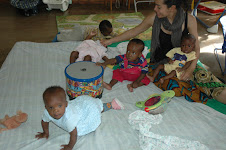
When a baby arrives, a file is opened (date of birth, date of arrival, information about his/her parents/family etc.). The nurse checks his/her general health. The baby is taken to the hospital for tests (TB, HIV etc…). Then a “mother” is designed to take care of him/her during his/her stay. There is 1 mother for 5 babies… The mother is responsible for his/her well being (changing nappies, feeding etc.). Johanna and I are extra “mothers”…


The rest of the staff comprises: a lady responsible for the bottles, a cleaning lady and a cook.
There is also a nurse, a social worker, a driver, a gardener… There is 3 teams sharing 2 shifts (9am to 4pm and 4pm to 9am)…

Monday, 23 July 2007

Esther makes my day

A quite normal day at the nursery except that Philip ‘s meeting on Friday seems to have done some good … Mwawa and Mambo "are very happy to see us"… "They really missed us"… They eventually looked at our introduction forms and realised that our backgrounds might be helpful… I don't know what to think... I would have preferred that they accept our help in a more genuine way... It doesn't matter... Esther makes me laugh. She looks like a 99years old baby... Things are not that bad after all...

Sunday, 22 July 2007

Breakfast with the "Chancellor"...

Philip invites us to join him and the head of the Chamber of commerce in Malawi for breakfast… He keeps referring to him as Chancellor… After a while, we understand that Chancellor is actually his first name… not his title. He tells us about when he travelled to the US a few years ago… When he arrived at the airport, officials gave him the VIP treatment thinking they were dealing with the head of the government of Malawi!!!

In the afternoon, we go to Chinansungwi. The people of Cedrek Village welcome us.They are very happy to see Philip… He asked not to have the “greetings ceremony” but such things don’t exist in the Malawian culture…
They walk our car to the village singing and dancing… I’m happy to see them happy and they’re happy to see us happy…


Raising Malawi is there to develop a feeding program as well as an early child development centre. Most NGOs in Malawi have the same moto: to get a meal, the child has to go to school… Some children can walk 3hours to reach the centre. Meals are not served on weekends… The kitchen is clean, well organized…


The Cedrek Village has also a water pump… The people can grow vegetables and maize – main ingredient of the Malawian food, and soon they’ll be able to grind grain into flour thanks to the brand new maize mill…


The classroom is spacious, quite colourful… Kids are taught some basic English.
The teachers also run an AIDS club. When I ask what do they say to the children during this class, one of them tells me how important it is to have a playground for the children to be busy and therefore not to be involved in “nasty businesses”…

Saturday, 21 July 2007

Kondanani Children’s village

Philip takes us to "Kondanani Children's Village" built on a 6 acres of land in the rural area for children in the 3 to 6 year old age group.

Facts: Kondanani, a non-governmental Christian organization, was established in November 1998 to offer hope to the orphaned children of Malawi.

The need for the establishment of the orphanage arose due to the high rate of HIV/aids infection in the country, which robbed many children of their parents. Hundreds of children are orphaned or abandoned in Malawi everyday. The extended family system had collapsed, and HIV had become the single largest cause of death among Malawians between the ages of 15-49 years, the childbearing years for women. Mothers who have contracted HIV often die during childbirth. Those that don't die, often abandon their children in the hope that they will be found by someone who will be able to care for them.

Due to the fact that many other orphanages would not admit babies because of the cost, and that it is labor intensive, Kondanani embarked on admitting such babies rather than leave them to die in the villages.

Only babies below the age of 6 months are admitted. Every child is either affected or infected by the HIV/aids pandemic.

The village consists of houses. There are 12 children in each of these houses. A housemother who is assisted by a nanny and cleaning lady cares for the children.

Each of these houses have a name, "House of David", "Martha's Cabana"… They are named after people who have contributed significantly towards their construction.


They have a hall which is used for school assembly, the children to play in, to watch dvd's and video's, for entertainment…

They have a central kitchen which prepares three wholesome meals every day for the children plus snacks. The children eat in their own homes as a family.

They plan to build more houses, including a high school, trade school... Higher education such as university will be also on these premises with residences for the students.

The Door of Hope. This is a basket which is made of steel and cemented into the wall near the main gate. Women who want to abandon their babies can leave them in this basket. There is a magnetic censor under the mattress and when someone puts a baby inside a buzzer will go off in the staff room of the clinic. Then the women have 5 minutes to leave in order to not been seen.


It is a fact that many young women are killing their babies by drowning them in the pit latrine, a hole in the ground used as a toilet in the villages.

This is a great place where happiness is seen everywhere...

http://www.kondanani.com

Friday, 20 July 2007

Blantyre

Last minute decision: we decide to go to Blantyre with Philip. We may not have another occasion and we hope to have the opportunity to see the places he’s planning to visit. Philip is the managing director of Raising Malawi. He’s here to oversee all the projects. He had a meeting with some people from the Ministry of Hope this morning. Things are about to change at the nursery...

Ah la la!!! That was a very noisy flight… on a bi-plane… our seats are the ones closed to the propellers. We arrive at Blanthyre around 5.30. After Lilongwe, it’s like arriving to NY… Lights and shops everywhere… We stay at Pedros’s Lodge. The owner, Jean-Pierre is French. He came on holiday to Blanthyre with his wife 8 years ago and heard about a restaurant which was on sale... They went to have a look and decided to stay. He tells me about how easy it is to start a business in Malawi... but also how hard it is to keep it healthy...
.


Theresa

We pick up 7 children at the hospital. They all needed injections. Madalitso is very serious in the car. It’s his first time outside the nursery… His eyes are big opened. A group is already there when we arrive. 15 teenagers coming from Nottingham, UK. They’re nice but they don’t really know what to do. Johanna and I are busy helping them to change the babies. The team of the day is very nice. We work well together. A nice day.


Mambo brings a new baby. Theresa is 1 month old. Her mum died 2 days after she was born. The father is nowhere to be seen. Anna, the nurse, does a check routine on her. She seems okay; her stomach seems to be swallowed though… She might have been fed with porridge instead of milk.

Twisted ankle

The car is late… it becomes a habit. There is nothing special to say about that day except that I twisted my ankle… Well I was not trying to save a baby’s life, it happened at the step’s class… I’m so upset.

Christopher

The car picks us up at 8.00AM. We’re going to Kasunku to return Christopher to his family. 2 young students are in the car with us. Davison drives too fast. We are a little bit apprehensive. What is Christopher’s reaction going to be ? He stayed almost 5 months at the nursery. He was brought there because he has lost both his mum and dad. And here he is, about to be handed to his uncle. But everything goes fine and all parties are happy. Baby’s Christopher has a new family. It is an happy end.


On our way back, we pick up twins. Their story is similar to most of the babies at the nursery. Their mum passed away after giving birth. She had an hemorragia and lost too much blood. The father has already 4 other children ; He left the twins to the grand-mother who had to leave her village and seek for help/milk as the babies stop crying (for not being fed properly). We eventually find them. The hand-over is very quick. It looks like no emotions must be shown. We wrapp the babies Moise and Myriam and off we go to the nursery. Johanna and I get one each… They are so tiny but beautiful babies… Another emotional day in Malawi.

And… our car has to go to the hospital for an emergency. We walk from the nursery to Kumbali’s… 20km…

Phillipe's arrival

Strange day. The car is not here when we arrive at our meeting point. We decide to walk instead of waiting. After a few kilometres, we call Davison… He’s on his way. Something was wrong with the tyres. Well… it would have been nice to let us know ! There is a group of 20 people at the nursery when we arrive. Each of them carries a baby…

Fiuni is the only one left. Fiuni is almost 2 years old. He can’t walk not because his legs don’t work but because he doesn’t know how to use them. Fiuni only asks to be picked up. He cries quite often and no one really cares since he’s not a tiny baby… I think Fiuni is depressed… We decide to talk to Philip about him. Maybe we could find him a better place to stay with appropriate help. Cathy shows us the exercises that Fiuni has to do everyday. She’s a physiotherapist.

We have dinner with Philip. It’s good to see him. Vikki joins us. We talk about these past 2 weeks… By the end of the evening, Philip has 3 priorities. To do whatener it’s needed to be properly introduced to the nursery’s team, find a place for Fiuni, arrange a training program for the staff…

Dimanche 15

Quiet day at Kumbali’s. We go for a long walk.

Saturday, 14 July 2007

Fête nationale française à Kumbali. Je suis chargée de la traduction des petits fours. Mais pas canapés ni de champagne pour nous, on quitte le lodge à 7h30 pour la nurserie. La journée se passe plutôt bien. Johanna et moi n’arrêtons pas une minute. Les mères se mettent à chanter. C’est très beau, les bébés sont hypnotisés… On rentre à 17h00.

Friday, 13 July 2007

Day off

Anna nous a demandé de travailler samedi à la place. L’équipe sera en sous effectif pour cause de formation. On passe la journée à Kumbali. Je m’ennuie un peu. On va voir la ferme. Un bébé chèvre prématuré nous y attend. Je n’ai jamais rien vu d’aussi mignon. Sa maman, très jeune, refuse ou ne sait pas comment le nourrir…

Johanna et moi profitons de cette journée pour échanger nos impressions sur cette première semaine à la nurserie. Nous avions tellement de projets… Nous voulions partager notre expérience professionnelle et contribuer à améliorer le fonctionnement de la nurserie. Nous sommes tellement occupées par les bébés, qu’on ne sait plus vraiment comment s’y prendre. Il nous faut d’abord gagner la confiance des mères, les convaincre du bien-fondé de notre présence et cela risque de prendre du temps. L’erreur initiale est de ne pas nous avoir présentées correctement à l’ensemble de l’équipe. Il y a vraisemblablement un problème de communication auquel il faut qu’on remédie. Philippe, directeur de « Raising Malawi » arrive lundi. On espère pouvoir réajuster le tir grâce à son aide.

Anna asked us to work Saturday instead of today. They'll be short of staff. We spend the day at Kumbali. I'm bored. We go to the farm. There is a premature baby goat. He's so cute!! His mum doesn't want or doesn't know how to feed him...

Johanna and I exchange our impressions on this first week. We wanted to do so much... We wanted to share our professional experience and contribute to improve things at the nursery. We are so busy with the babies that we don't know how we are going to make it happens. First we have to be trusted, convince the mothers that we are here to help not to judge... It will take time. The main mistake was not to be properly introduced to the team. Communication, communication...

Thursday, 12 July 2007

Madaliso et Peter

J’adore les matins. Me pencher sur les berceaux et réveiller en douceur ces petits bébés. Ils reconnaissent nos voix. Fanny ouvre les yeux et me sourit. Cela suffit à faire oublier la dure journée d’hier et les autres à venir. La plupart des bébés sont mouillés et certains ont certainement passé une partie de la nuit dans cet état. Peu sont changés, certaines mères préfèrent les nourrir d’abord pour éviter de les changer deux fois.

I love mornings. when we wake up the babies. They recognize our voices. Fanny opens er eyes et smiles. It's enough to wipe out the past difficult times and those to come. Most of the babies are wet et some of them have certainly spent a part of the night in that state. Few of them are already changed, some of the mothers prefer feeding them first not to have to change them twice.

Alors c’est notre marathon du matin. Les changer tous avant qu’ils ne soient nourris. Il n’y a qu’une salle de bains, elle n’est évidemment pas adaptée. Les bébés ne sont donc pas souvent baignés, juste « rincés »… Johanna et moi faisons couler des bains. Les bébés adorent… Il faut qu’on travaille sur ce point. Anna l’infirmière nous parle des conditions d’arrivée de certains des bébés.

Peter est arrivé à l’âge de 2 mois à la nurserie. Des bandits ont battu à mort son père, sa mère a dénoncé les coupables, ceux-ci l’ont tuée pour se venger.

Peter arrived at the nursery when he was 2 month old. Muggers beat his father to death; his mother went to the police to report them and was killed as a pay back.


Madaliso a perdu sa maman en venant au monde – c’est assez courant dans le pays. Elle est HIV positive. Son père souhaite la récupérer plus tard, il n’a pas les moyens de l’élever pour le moment. Madaliso est un très joli bébé qui gazouille sans arrêt. Elle ne pleure jamais sauf qu’on la repose après un câlin.

Madalitso lost her mum when she was born. She HIV positive. Her father is willing to take her back but he's too poor to look after her.
Madalitso is a very beautiful baby who sings all the time. She never cries except when you put her down after a cuddle.

Wednesday, 11 July 2007

Flash back

Même routine sauf que la journée est gâchée par les remarques constantes des mères. Elles n’acceptent pas vraiment nos initiatives, ne comprennent pas notre empressement à changer les bébés. Une d’entre elles demande même à vérifier les couches –au cas où on changerait des bébés secs ? Je comprends leur point de vue. Elles voient débarquer des volontaires à longueur de temps, des « azungus » qui savent mieux et qui critiquent tout. La nurserie est ouverte aux visiteurs. Un groupe de 20 jeunes américains débarque, appareil- photos en main, ils s’emparent chacun d’un « so cute baby !». On dirait qu’ils visitent un zoo. Puis j’ai un flash-back… Moi en avril dernier visitant la nurserie et m’exclamant « These babies are so cute »…

Tuesday, 10 July 2007

Routine

Qui est Johanna? Johanna est une ancienne collègue. Elle est suédoise. Elle est arrivée une semaine avant moi.

Kumbali Lodge: L’arrangement initial s’étant apparemment révélé catastrophique, Johanna s’est mise en contact avec Maureen et Guy, propriétaires de Kumbali, l’endroit où nous avions logé lors de notre dernier séjour en avril. Ils sont adorables. Ils ont aligné leurs prix à notre budget. Nous avons donc chacune une petite chambre avec salle de bains commune. C’est un luxe réellement appréciable après nos journées à la nurserie.

Who is Johanna ? We used to work together. She’s swedish. She arrived 1 week before me.

Kumbali Lodge : The initial plan was to stay at a guesthouse but Johanna didn’t like it at all so she called Maureen and Guy, owners of Kumbali, the place where we stayed in April. They are great people. They matched their prices to our budget. We have one room each and we share the bathroom. It’s really good to be back at the lodge after a day at the nursery.


Pour garder la forme mais aussi pour vider nos esprits, nous décidons que tous les jours, nous marcherons les 3km qui séparent Kumbali de la route principale, aller et retour! Il y a un village sur notre retour. On se retrouve assaillis d’enfants accourant de toutes parts en criant “Azungus! Azungus!”. C’est assez impressionnant. Ce sera notre petit bain de foule quotidien!

To keep in shape but also to empty our mind, we decide to walk from Kumbali to the main road every day (3km x 2). There is a village on our way. The children are so excited and follow us shouting « Azungus ! Azungus ! ». It’s really funny. We look forward for it every day.


Lever les bébés, changer les bébés, nourrir les bébés, changer les bébés, jouer avec les bébés, changer les bébés et surtout… leur donner le plus d’amour possible même dans ces gestes quotidiens. Il me faudrait 10 paires de bras. Pour parer à ce handicap, on s’assit par terre. Jambes en tailleur, on peut en fait s’occuper de 5 bébés à la fois…

Wake the babies, change the babies, feed the babies, change the babies, play with the babies, change the babies and most of all... give them as much love as possible. I would need 10 pairs of arms. To fix this problem, I have a technique... sat on the floor, legs folded... You can look after 5 babies at the same time.

Nous décidons d’acheter un parasol pour donner un peu d’ombre à ce jardin… Les bébés sont exposés directement au soleil. Mambo –travailleur social nous explique que le soleil est très bénéfique. Johanna et moi rétorquons qu’une exposition directe et prolongée peut avoir des conséquences (les yeux notamment) mais Mambo explique que la peau des petits bébés noirs est plus résistante que la nôtre et qu’une fois de retour dans leur village, ces bébés seront confrontés à la réalité quotidienne et qu’il n’est pas bon de les surprotéger ou de leur donner ce qu’ils n’auront plus une fois avoir quitté la nurserie. Il marque un point.

On ne trouve pas de parasol, mais on a rapporté un paquet de couches pour les plus petits bébés et des beignets à partager pour le thé… Beignets qui seront finalement l’objet d’une dispute et couches qui disparaîtront durant la nuit…

We decide to buy a big umbrella for the babies not to be too hot in the garden… Mambo – social worker, explain to us that direct exposition to the sun is really good for babies. We retort that it can be dangerous though (especially for the eyes) but Mambo responds that black skin is more resistant than ours and that it’s not a good thing to « give » baby something that they will miss once they’re back in their village. He’s right.

We can’t find any umbrella but we buy nappies for the smallest ones and some doughnuts for the tea break… Later there is be a fight over the doughnuts and the nappies will disappear during that night.

Monday, 9 July 2007

First day

7h30: Départ pour “Crisis Nursery”. Je passe les portes de la nursery un peu émue. Je réagis instantanément à l’odeur sucrée ambiante – la bouillie quotidienne dont les bébés sont nourris. La directrice me salut brièvement. Je ne suis présentée à personne… J’entends des pleurs. Et me voilà penchée au-dessus des berceaux à la recherche de Fanny. Au passage, je reconnais Fiuni, Prince, Tamanja… Pas de Fanny, mon Coeur s’affole un peu mais on me dit qu’elle a passé le we dans une famille, qu’elle sera de retour plus tard dans la journée.

Je demande où est Patricia. Anna l’infirmière m’apprend qu’elle est décédée en Mai. Les larmes me montent aux yeux. Je suis très triste. Patricia souriait tout le temps. C’est arrivé soudainement. 2 autres bébés sont morts le même mois.


7.30AM. Departure for the « Crisis Nursery ». I’m very moved when I enter into the nursery. I instantaneously react to the sweet smell that characterises the place – the daily puree prepared to feed the babies. No one is there to introduce me… I hear crying babies. And here I am, going from one bed to another, looking for Fanny. I recognise Fiuni, Prince, Tamanda… but I can’t find Fanny … someone tells me that she spent the weekend in a family and is due to be back later today. I then ask about Patricia. Anna, the nurse tells me that Patricia passed away in May. Tears come to my eyes. I’m very sad. Patricia was always smiling. It happened very suddenly. 2 other babies died during the same month.


Je passe la matinée à changer un nombre innombrable de couches. Elles sont en tissue et irritent les fesses des bébés quand elles ne sont pas changées régulièrement – ce qui est le cas malheureusement. Je découvre des plaies à vif, Johanna me dit qu’elle a surpris une des “mères” en train d’appliquer du désinfectant qu’utilisent les adultes pour désinfecter leurs mains sur les fesses des bébés! On décide d’emmener les bébés dehors, de laisser respirer toutes ses petites fesses au soleil pour permettre aux plaies de sécher… Les “mères” nous regardent d’un drôle d’oeil… On y a le droit à chaque fois qu’une de nos initiatives dérangent la routine établie.

I spend the day changing nappies. They are cloth nappies and irritate the babies’ bums when they’re not changed regularly – which is often the case unfortunately. I discover really bad rashes, Johanna tells me that she witnessed a « mother » applying some hand sanitizer on babies’ bums! We decide to take them outside, to leave all these little bums breath and dry… The « mothers » look at us in a strange way… We get this look each time we disturb their routine.

Fanny arrive enfin. Elle a grandi et semble en bonne santé. Je la prends dans mes bras et la couvre de bisous. Elle sourit. C’est ce sourire sans dents qui m’a ramenée au Malawi. Je suis très, très émue. Elle est jolie. Je craque complètement. Elle est mouillée et je découvre les mêmes vilaines plaies en la changeant. Hop! Dehors et fesses à l’air pour elle aussi.

Johanna et moi faisons parties du Day shift. On quitte la Nursery à 16h, éreintées. La journée n’est pourtant pas finie. On se rend à un cours de step. On a décide de s’y rendre 3 fois par semaine histoire de décompresser un peu et de faire des rencontres. J’en ressors lessivée. Je dîne. Au lit…

Fanny arrives. She grew up a lot and seems to be healthy. I take her into my arms and cover her with kisses. She smiles at me. It's that smile that brought me back to Malawi. I'm very moved. She's beautiful. I'm in love. She's wet and I find bad rashes while changing her. I take her outside with no nappy on.

Johanna and I have a day shift. We leave the nursery around 4PM, exhausted. The day is not finished yet... Step class. We decided to go for a class 3 times a week in order to evacuate our stress/frustration...and meet people. I'm so tired. Dinner. Bedtime...

Friday, 6 July 2007

Lilongwe

Vol sans réel encombre mis à part un départ gâché par 2h d’attente sur la piste d’Heathrow pour une raison restée obscure. J’ai juste le temps d’attraper ma correspondance à Johannesburg et de réaliser qu’il peut faire froid, très froid en Afrique (2°C)!!

My flight was fine except for a 2 hours delay at Heatrow for an obscure reason. I just have enough time for my connection at Johannesburg and to realise that it can be cold, really cold in Africa (2°C !!)

J’arrive à 13h à Lilongwe où m’attend un petit comité d’accueil. Ma valise est là aussi – ma collègue Johanna n’a récupéré que la moitié de ses bagages au jour d’aujourd’hui… Il faut pousser la voiture qui refuse de démarrer. Les locaux se marrent bien…
Je passe le we au Lac en compagnie de jeunes “azungus” (blancs) vivant à Lilongwe. Trop d’alcool à mon goût mais douce transition à ce qui m’attend.

I arrive to Lilongwe at 1PM. My suitcase is waiting for me too – my friend Johanna only got 1 of her bags until now… We have to push the car which doesn’t want to start. Locals are laughing…
I spend the weekend by the lake with some young « azungus » (foreigners) living in Lilongwe. Way too much alcohol for me but a nice transition to what is waiting for me.

Thursday, 5 July 2007

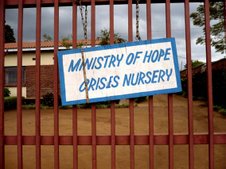
The Crisis Nursery


The Ministry of Hope was established in 1999 by Malawians as a local, community-based response for meeting the needs of the growing number of children orphaned by the AIDS epidemic.

Over 200 orphans were registered when the Ministry started, and this has now grown to several thousand. Today, Ministry of Hope sponsors feeding centres, education programs, a crisis nursery and international volunteer efforts through a community-based approach.

In the course of providing for these many needy children, it became apparent that caring for the very youngest ones is simply beyond the means and ability of the volunteer staff at the community centres and it is beyond the ability of hospital staff to cope as well. Abandoned babies and severely malnourished children simply perish.

The Crisis Nurseries program is a response to the rising tide of orphaned, abandoned and HIV positive babies in Malawi. The infants are cared for during their crisis period while arrangements are made to place them with relatives or adoptive families.The Crisis Nurseries program is also cooperating with the Raising Malawi project, founded by Madonna, in their mission to offer lasting solutions for the orphans of that very poor country. This collaboration is sending volunteers to provide direct physical support, including assistance with food, medical care and education.