Tuesday, 21 August 2007

Busy like a bee

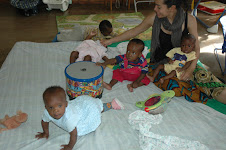
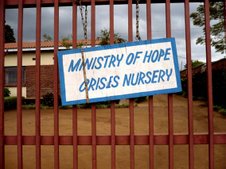
Daniel is at the nursery waiting for me. He’s in charge of the volunteers working for the Ministry of Hope. Well... it’s so nice of him to stop by 2 weeks before I go back home!!! He apologizes. I save you the bullshits… He wants me to train some preschool teachers. Ministry of Hope runs 7 nursery schools around Lilongwe and there is no budget allocated to the teachers’ training programs. I’m very happy to help but they could have come to me earlier. I only have a few days to have my training materials ready.

Later. I’m busy like a bee (as the mothers say). I start drawing on the walls with a baby on my back… I have to re-do my giraffe 4 times. Well I’m a perfectionist you see... Luckily I have some help. Here come Rachel and Adam. They’ve been in Malawi for 3 month and are doing some volunteering work too. I put a pencil in Adam’s hand… He’s damn good!

Here it is... For Loïc.

Monday, 20 August 2007

A sense of achievement

Johanna is in Blantyre for 2 days. The car shows up around noon – I was ready at 8.30am… I try hard not to show my irritation; perhaps it is what they expect from me. They seem surprised actually. Or maybe they’re not. I gave up trying to understand the way they behave.

Anyway I want to buy some paint. I’ve been thinking of drawing on the walls of the nursery for some time. I only have 2 weeks left in Malawi. Our work is not easy and time an issue. Therefore we had to accept and deal with our frustrations. The situation is disappointing but I chose not to see it as a waste of time. I know that we are making a difference for each of these babies. Every contact, cuddle and smile is a mini step to his/her physical, mental, social, and emotional development. It’s enough to make me happy. But drawing on the walls will give me a sense of achievement …

Sunday, 19 August 2007

Cultural norms ful HIV in Malawi

I’ve been told that “Infection rates amongst teenage girls are four times higher than boys”. I wonder what makes women more vulnerable to HIV. Here are a few answers from different articles that I found on the Internet. It is not an issue with simple cause and effect.

At a biological level, women are more vulnerable because the mucosal surface of vagina is more exposed during intercourse; because semen has much higher concentration of HIV than vaginal fluid; and initiation into sex at a younger age makes women physiologically more susceptible to HIV.

However the article is not based on medical reports but on information that look at the structures of society. And it seems that traditional customs exacerbates the spread of HIV/AIDS.

*Marriage. Young women, particularly teenage girls, marry older infected men and have sex with their peers too. Moreover, polygamous marriages are not uncommon.

*Poverty and financial dependency. Men called "sugar daddies” buy sexual favors from young girls with tempting material goods such as make-up, mobile phones and clothes.

*School. Male teachers put pressure on girls to have sex to pass their exams.

*Shaking the dust. In the Balaka region (east of the country), young girls - 10 or 11-years-old, are taken off to a separate hut and visited by several men who have sex with them.

*Inheritance. When a man dies his wife automatically becomes the property of his brothers, along with his cattle, house and land. She might be HIV positive and her brother-in-law might have a wife or wives already. Each time a wife inheritance occurs, the number of people at risk of infection multiplies.

* Hyena. Custom that symbolizes society's view of women as nothing more than sex objects. According to this tradition, a family pays a man to have sex with the virgin daughter. She is given a piece of white cloth to be shown to the women of the family as “proof” that sexual intercourse took place.

These forms of coerced sex -from violent rape to cultural/economic obligations to have sex when it is not really wanted, increases risk of micro lesions and therefore of sexually transmitted infections or HIV infection.

* Myths on HIV/AIDS. One of these is that having sex with a virgin offers a guaranteed cure. Another is that clean and well-dressed people do not have HIV/AIDS and cannot be infected.

* Stigma, descrimination and denial. Not to admit that they have been infected. Women risk violence, abandonment, neglect, destitution, ostracism from family and community. Although a mother may know she is HIV positive, she continues to breast feed her baby. The fear of being "found out" far outweighs the risk of exposing the infant to HIV/AIDS. If someone dies of AIDS, it is common to hear relatives blaming the death on witchcraft or poison. Even the official cause of death is recorded as "a long illness" - pneumonia or meningitis.

"AIDS is killing Africa. Malawians change YOUR behaviour now! Let us save our country." Bingu wa Mutharika, President of Malawi (see picture).

Cultural norms fuel HIV in Malawi, Julian Siddle
www.portal.unesco.org
www.purposedriven.com (keyword:Malawi)

Saturday, 18 August 2007

Taboo

We met Charles 2 weeks ago. He runs a locally driven project (community project) addressing the social issues that increase the risk of HIV/AIDS as well as the social issues created by the disease. His main activity is to promote HIV/AIDS prevention and behavior change amongst the youth and adults. Education is the key. He heard that I was a teacher and asked me to do a lecture… I don’t feel comfortable at teaching a subject I don’t know well but I can sense how important it is for him to have azungus involved in his project.

It’s 9.30am when Johanna and I enter the classroom. Around 30 young people (14 to 20 yrs old) are listening at Charles. The topic is on the chalkboard: Sexual transmitted infections (STIs). We sit at the back. I observe. A few notebooks and even fewer pens passing from a hand to another; an attentive audience; 3 girls only… The objective of the lesson is to demonstrate that the presence of STIs greatly enhances the risk of HIV infection. Charles asks about the symptoms of these infections... Some of the answers are quite scary and explain why ill people often suffer of stigma and discrimination…

Recess. Charles doesn’t believe in charity only and would like these young people to be self-sufficient… He thinks that dancing and playing music could be a good way to make money. They prepared a show for us...

There is a boy who put his own drums together. It is so clevery done. The main body is a washing machine drum and he uses a ear of corn to hit it. I love it!!


It's my turn. I decided not to teach but to debate on the topic. I prepared a few questions... Johanna helps me. My approach is informal and open. I want to challenge the participants to overcome their own misgivings and miconceptions... It's difficult to have them talk... I ask if they use condoms. "YES!" I'm not convinced. I play the "Madagascan card" to make them more confortable... I say that in my country, men don't use condoms because "it's not cool"... The reaction is immediate: the "cool ones" reveal their true colors. Using a condom is like "keeping the paper on the sweet". Another one does not see the necessity of using them since they are not 100% safe. A third one explains that contracting HIV is god's will. I do think that faith in God is a real issue in this country but it's another topic.

Anyway we debate for 1 hour... I realise that most of these guys knows the topic as well as I do. Ways to contract HIV; means to avoid it etc. As a matter of fact, information on the HIV/AIDS pandemic is widely available. So why is such little change in people's behavior? The problem is complex. The subjects of HIV and sex are still taboo in many African cultures. How do you do it when you can't talk about the thing you're trying to inform about? People are reluctant to admit that they have been infected. In Malawi, if you look at death certificates of people who obviously died of aids, you see causes ranging from a stomach ache to a "long illness". The African culture is also slow to help fight the epidemic because of the strentgh of the traditional practices (see next note). Practices that result in more women being infected - infection rates amongst teenage girls are four times higher than boys.

Friday, 17 August 2007

Malawi Tobacco Industry

I’ve noticed that the majority of the azungus we have met in Malawi are either involved in tobacco industry or in volunteering work. I did a bit of research on the Malawi Tobacco Industry (www.american.edu/TED/maltobac.htm) . It's long but quite interesting. I will work on the NGOs later.

Malawi is confronted with many problems. It is considered one of the world's poorest nations, its economy remains weak, its external debt is 2.3 billion, AIDS is ravaging the population, and the average life expectancy is a mere 36.6 years. As if this were not enough, Malawi's environment is also in danger. Deforestation is considered the biggest environmental problem facing Malawi and the production of tobacco leafs for export its principal cause.

* Malawi is estimated to be losing 3 percent of its forests every year and the direct link between tobacco production and deforestation is manifest - burning of fuel wood for the curing of the tobacco leaf, need for wood to construct curing huts (which need to be changed every 2 years) and of course need to clear land for cultivation.

* Deforestation in turn causes soil erosion due the loss of vegetation cover. Further, tobacco as a crop depletes the soil of important nutrients including nitrogen, phosphorus and potassium. All of this in turn decreases necessary habitats and threatens biodiversity.

*At the social level, deforestation and reduction in soil productivity means increased hardship for those in the rural areas as more and more time, energy, and inputs will be needed to do everything from cooking, growing food, and constructing buildings. Women and children absorb most of this burden.

*Malawi is also a nation suffering from severe poverty and malnutrition. There is an ethical issue of devoting so much prime agricultural land for tobacco exports while many people in this nation are hungry.

With all these negative issues associated with tobacco production, why does Malawi continue to rely so heavily on this crop? How can a nation justify supporting tobacco crops while ignoring the needs of its people?

Well Malawi is in serious debt and needs to earn foreign currency through the export of goods and/or services. The government sees tobacco production as the most effective means of achieving this objective.

The tobacco industry has been the leading economic sector in Malawi since independence. It is the nation's second largest employer after the government. Tobacco currently accounts for nearly 80% of the nation's export earnings.

The tobacco industry was intended to increase economic growth and promote development in Malawi. For many years, with the support of international donors such as USAID and the World Bank, the Government of Malawi has encouraged and provided incentives for the production and export of tobacco. Unfortunately, things have not gone accordingly to plan.

Tobacco prices on the international market have declined by 50% over the past 10 years. Industrialized nations, the main market for Malawi's tobacco (less than 2% of the tobacco produced in Malawi is used for domestic consumption), have been experiencing a consistent decrease in tobacco consumption with the increased awareness of the negative health effects of tobacco. This has been compounded by the recent devaluation of the currency (the kwacha). Not only have market prices gone down, but also the costs of inputs, such as fertilizers and pesticides, have gone up during the same period. This has had a devastating effect on the nation's ability to earn foreign currency.

The export orientation of the economy, the huge debt, the devaluation of the kwacha, the slipping global tobacco markets but also the increasing rate of deforestation, the high population growth rate and continued poverty paint a very bleak picture for Malawi.

Malawi must decide if it should focus on the current need to gain foreign currency, ignoring the possible environmental implication, or if it should be more forward looking and plan a more sustainable development approach, even if that means less money in the short-run. If current trends continue, deforestation will reach the point where the decreasing tree resources will impede not only tobacco production but will also interfere with such essential needs as fuel for cooking and timber for construction.

Tobacco, a crop that was once seen as Malawi's key for development, is actually leading this African nation to its demise...


Tonight is the non official opening of the Kumbali Cultural Village. Here is a picture of Johanna and I... helping behind the bar! Behind us, Fire... our boss for the night...

Thursday, 16 August 2007

Nsima

Quiet day at the nursery.

One of my friends asked me what I've been eating here. Well, we have dinner at the lodge and they serve "western food" but for lunch we eat at the nursery. The mothers cook nsima almost everyday.

Nsima is the “staple” food of Malawi. Made with corn, cassava, or other starch flour, this thick porridge is eaten with the fingers and used to scoop up other food, e.g. meat or green vegetables.

Nsima holds a very important place in Malawi and most Malawians eat it everyday, and the majority will say they have not had a meal if nsima wasn’t involved. Nsima has little nutritional value. But it’s really cheap and really filling, hence its popularity here.

I’ve been told that nsima is also intimately related to sex. If a husband does not eat his wife's nsima, she will ask him where else he has been "eating."

To be honest I'm not a fan of nsima... I've tried a couple times... I usually skip lunch or have a banana.

Wednesday, 15 August 2007

Rest

We worked last night so we're off today. On our way back to the lodge, we ask to be dropped at a coffee place to have breakfast. Then we walk the 8km left to Kumbali... We're nuts.

Tuesday, 14 August 2007

Night shift

Today we work the night shift – 4pm to 8am. We are supposed to be picked up between 3 and 4pm. The car shows up at 7pm!!! We stop by Shoprite to buy some cakes for the mothers. The lady serving us is so slow… I could pinch her.

When we arrive in Area 47 it’s as black as pitch. There is a power cut… Candles light the nursery. It’s actually very cosy. Most of the babies are already asleep and the mothers about to eat. We help them to clean. They laugh when I offer to mop… We eat our cakes while having a cup of tea. We all go to bed around 9pm. Johanna and I get to sleep in the office – the mothers sleep on mattresses in the corridor. The nursery is so peaceful. We should do nights more often…


5.00am. If you could see my face… I woke up every 30min to feed or change a baby and fought with mosquitoes the rest of the time. And now it’s time to give all the babies a bath. The sun is not up yet… I have a headache. Did I just say that we should do nights more often?

Monday, 13 August 2007

Happy end

Johanna is in Blantyre for the day… and me I’m very angry because the car is late as always. The driver eventually arrives. He’s almost 3 hours late… No excuses just a vague “I had stuff to do first…” We totally understand the fact that we’re not a priority on their list but they could give us call!! I thought it was a “money” matter – maybe they can’t afford to call us… I asked them to give us a “missed call” … so that we can call them back. But they never do… When I arrive at the nursery, I can’t hide it… I’m furious and I said so. Mwawe doesn’t like it. I don’t care. I’m tired of the game now. I must look pretty scary… “It won’t happen again” she says.

Later Mwawe sits with me… and tells me about Mwowi, the little boy with the wounded foot (see Friday 10). He went back to his parents. No one abandoned him into the crops. He was playing with some other kids and got lost. Happy end.

Saturday, 11 August 2007

Kumbali Village

We take a walk to “Kumbali Village”…
One morning, Guy (owner of Kumbali’s Lodge) wakes up with THE idea… To develop a place where people can experience the very essence of Malawian culture. Here is a picture of the main hut… for shows, conferences, courses etc. It’s an eco-friendly village using wood from dead trees only. There will be no electricity and no water. The guests will be able to stay in smaller huts enjoying the real Malawian’s life style. Only 1 month since they've started building the village and it looks great already... I wish I could put my projects into practice in such a short time back to London...


Guy wants to show us around... We accept... too quickly! He takes the both of us on his motorbike... on very bumpy tracks!!!

How silly we look with our weekend dresses...Lots of fun though. Thanks Guy!

Friday, 10 August 2007

Sad

Johanna and I prepare the mats in the garden… when we notice a young child that we’ve never seen before. His right foot is bandaged. We ask around about him when Mwawe explains that social services contacted the nursery the day before. They had found a child in the crops, a foot badly wounded. It seems that he has been “dumped” there 3 days ago and that some wild animals attacked him. He’s traumatized. The mothers are very troubled and take great care of him. I smile at him… What else can I do? I choose not to interact with him today; too many strangers surround him already… The details of his story are not known yet but he can talk. His name is Mwowi.

Thursday, 9 August 2007

Favourite time

There are 5 cars waiting outside the nursery when we arrive this morning… around 20 people in the garden and a guy filming… The mothers are sitting on a mat with a baby each… What’s going on?!! Well… the Rotary Club is donating a brand new car to the nursery and they’re having a ceremony to celebrate it. Guess what?… speeches!!!

It’s a regular day at the nursery… My favourite time there is when I put a baby to sleep… I lie down and put him/her on my chest… where my heart is. The pulsations help babies to relax. Some time-to-time they raise their heads to make sure that I am still there… then they close their eyes… and their bodies become heavier and heavier… It’s a beautiful sensation.

Wednesday, 8 August 2007

Chifuniro

I’m by myself at the nursery today. Johanna takes Lucas to a doctor. He needs to have his wound cleaned.

There is a baby who cries constantly. Chifuniro is a new little one; he arrived on Monday. He’s obviously disoriented and sorrowful. He’s around 6 months and just lost his mum who died from asthma. He had time to get used to her. I decide to carry him on by back as African mothers do. He falls asleep after pulling a big handful of my hair… I try to put him back in his bed but he starts crying again. I spend most of the day carrying him around… while changing, feeding and bathing other babies.

Tuesday, 7 August 2007

Vaccines

10 babies need to be vaccinated today. The car is not adapted to transport infants. There are 3 car seats but no proper seats so we align them on the passageway. I try to secure them using my feet. Johanna and I get 2 babies each. I manage to free my left hand to hold another car seat… To make it even funnier, they need to be fed… on a very bumpy track. Sorry for the bad picture but I tried my best…


We arrive at the health centre… quite rudimentary… We sit in the waiting room. We are the only azungus and soon a little crowd gather and observe us. The nurse is efficient. Tamanda, Tamara, Theresa, Prince, Fanny, Mary, Madalitso, Bikiel, Esther and Chinsisi get their vaccines in less than 30 min.

On our way back all the babies fall asleep and so could I... but my head hits the windows... nasty bump...


When I open the door of my room, there is a very nice surprise waiting for me... a bouquet of roses and a card... from Yann. It's our 3rd wedding anniversary today and he managed to send me flowers! Je t'aime très fort mon doudou.

Monday, 6 August 2007

Hope beyond HIV

We take Praise to the BIPAI Children’s Clinical Centre of Excellence.

Praise was born in April but looks like he’s 1 month old. He’s a tiny baby. He is treated for TB (Tuberculosis) but his health doesn’t improve and has even worsened throughout the last few days. Praise’s mum was HIV positive… So Mwawe wants his blood to be tested. If the blood test comes back positive it means that Praise has HIV. HIV is a retrovirus that causes acquired immunodeficiency syndrome (AIDS), a condition in which the virus infects and destroys immune cells, breaks down the body’s defenses and can lead to life-threatening opportunistic infections.

Thanks to advances in the care and treatment of HIV/AIDS children no longer face a disease that once was invariably fatal, but rather one that is chronic and treatable. It’s not a matter of “there is no treatment for these children"... The medications and resources are available to save lives–it’s just a matter of getting those resources to the people in places most in need. Like Madalitso Praise will be put on Highly active antiretroviral therapy (HAART), a combination of antiretroviral drugs that can suppress the ability of the virus to replicate within the body.

Texas Children’s Retrovirology Clinic, in partnership with Baylor College of Medicine, has established the Baylor International Pediatric AIDS Initiative (BIPAI), the world’s largest international pediatric AIDS outreach initiative, to offer hope to children and families in developing countries across Africa and around the world.Established in 1996, BIPAI has put more than 5,000 African children on HAART.


Facts: Of the more than 2.3 million HIV-infected children worldwide, 90 percent live south of the Sahara. There, nine children under the age of 5 die every minute. And fewer than one in 10 children who need medications like HAART are actually receiving them. Half of all untreated HIV-positive infants die before the age of 2 for lack of medication that, when properly administered, can produce transformations almost overnight…

We wait almost 2 hours and are eventually send back to the nursery. The computers' system is down! I feel sad. Look at these tiny fingers...

www.childrenhospital.com, www.bayloraids.com.

Saturday, 4 August 2007

SFK Malawi

We are invited to join Lucas’s SFK graduation ceremony.

Facts: In 2006, eight Malawian teachers were brought to the SFK (Spirituality for kids) Headquarters in Los Angeles for a comprehensive educational training program. These teachers have returned to Malawi and have successfully co-created a specialized empowerment program for orphans. They now offer classes to street kids living in Lilongwe. This psycho-support program provides children with the SFK curriculum as well as personalized mentorship and care (e.g., medical care, education, transportation, lodging, and other support). SFK is based on the universal spiritual principles of sharing, caring, tolerance, human dignity and proactive behavior...

Lucas is about to receive a certificate recognizing his efforts during the first level of the curriculum.

Well… Speeches, songs, speeches, dances and speeches… Malawian people really like speeches! We only guess what is going on because the whole ceremony is “said” in Chechewa. It’s a very hot day but Johanna and I are VIPs so we get to sit under a tree…

All the participants are wearing the same T-shirt; on the back it says “Tichitire anzathu zabwino ndi chikondi kuti tilandire zabwino kwa ena” which means “Let’s do good things to others with love, so that we will receive good things from others” - Rule 7, Level 1.

http://www.spiritualityforkids.org
/curriculum.htm

Friday, 3 August 2007

Fiuni

A picture of Fiuni walking (see "A little miracle" note).


He has an allergic reaction to something that he may have eaten... His face swallowed. The white stuff on his face is "medicine powder".

Fiuni was even not able to stand one month ago... We make sure that he exercises everyday. It used to be a pain but it's not anymore. He even asks for it now!!!

Thursday, 2 August 2007

Meeting... M-A-G-A-L-I

1 month that we’ve been coming to Crisis Nursery… 1 month that we’ve been waiting for someone to introduce us properly to the staff, to explain them the purpose of our presence … Share. Share knowledge, experiences, feelings, worries… in order to improve things at the nursery… Together. Until now most of the mothers are suspicious of our motives. They smile but their body language says differently. They think that we spy and judge. A proper introduction would have certainly made our lives easier.

Eventually, we have a meeting with the Head of Ministry of Hope today… Well Charles doesn’t know my name… and I don’t think he was even aware of my existence until now. He keeps asking my name again and again… I have to say that I’m not feeling very happy about it but choose to laugh about it instead… Charles “assumed that everything was fine” and “want to open a new chapter”… We talk for more than 1 hour… a very unproductive talk. He doesn’t like when I say that some of their problems have quite simple solutions… He tells me how different is the culture, how difficult it is to deal with Mr So-and-so etc. Fair enough… Let’s play the game. He seems to be interested to hear that I am an adult trainer and was a nursery manager… Suddenly he wants Johanna and I to be the “Mentors” of Crisis Nursery… At least we are ‘strongly’ invited to suggest ideas, solutions etc. Good...

Wednesday, 1 August 2007

I love you

Quiet day at the nursery... These are pictures of Esther and Madalitso ...

Esther was born sometimes in January. So were her brother and her sister...coz Esther is a triplet!!! Her parents decided to turn her to Crisis Nursery because she was the weakest one... She always makes funny faces. I hope I will still be in Malawi when it will be time for her to go home.


You already know Madalitso's story... so sad. But she is not!...

Madalitso is the happiest baby of the nursery. When she looks at you with her big eyes, she wants you to know that it is important to enjoy every minute of your life. She does... I wish I could take her home with me.

Tuesday, 31 July 2007

Slash-and-burn

The nursery's car is still at the garage so we have to arrange our own transportation. We can only spend the morning at the nursery… Here is "Crisis Crew"; Tamanda, Chinsisi and Prince are very talented drummers!


Later that day, there is a fire not far from Kumbali. It looks huge and seems to come in the direction of the lodge. We decide to check on it… It’s already dark and there is no path… Scott looks at the sky and locates some stars in order to be able to find our way back. What’s the hell am I doing here?!!!

Slash-and-burn farming is a method of cultivation often used by root-crop farmers. Areas of the forest are burned and cleared for planting; the ash provides some fertilization, and the plot is relatively free of weeds. After several years of cultivation, fertility declines and weeds increase… It is the most destructive farming practice (deforestation). So, why is it done?

Malawi is one of the world's poorest countries, with many of its 12.1 million population in need of food. A leading cause of infant mortality is malnutrition. Many Malawians are subsistence farmers, growing everything their family will need during the year on less than one hectare of land. Many face hunger everyday, trying to make their crops last until the next harvest. Often the food runs out. Malawians call it the “hungry times”.

Monday, 30 July 2007

Tour

There is no car to take us to the nursery today so we stay at the lodge. At least I can catch up with my emails and update the blog… We’re bored so Scott takes us for a tour of Lilongwe. He works at the lodge and has some nails to buy… I’ve never been so excited to run an errand before!!

Lilongwe is split into two parts, Old Town and City Centre… and there is really not much to see. It is also divided in areas. The system for naming these areas seems quite arbitrary until you learn that is chronological, with area 1 being the oldest part of the town*… The Crisis Nursery is in area 47.

We find the nails in an indian shop and buy 10 kg of them. India is 3rd largest exporter to Malawi after South Africa and Zambia (fabrics, transport equipment, machinery, pharmaceuticals…). Most of the Indians living in Malawi are Muslims from Gujarat; mostly engaged in trade... Well, not a very interesting day... so is that note I'm afraid.

* from Bradt Guide of Malawi.

Sunday, 29 July 2007

Merci

Johanna has to go to Blantyre. So I join the “Leslau’s family” for the day- Nick, Maxine, their 3 sons (19, 16, 9) and 2 friends of their oldest son. They’re in Malawi doing some volunteer work too (www.clintonfoundation.org). For the past 2 weeks, they’ve been helping to develop a feeding centre… From constructing a house from scratch to painting walls... The centre feeds orphans living around. Some of them have to walk 3 hours to reach it… They only get a meal if they go to school… The newly built house will be a classroom… With the money raised, the Leslau also bought books, school stationary etc. Today is their last day so there is a party… I help Maxine with the hands’ printings on the walls (see picture) – it’s a great idea, it gives a sense of belonging as well as a touch of color. We blow balloons… There is no electricity but a car’s battery does the trick… We have music too!!! The ballroom is now ready…

We have lunch first. The kids are all in a room. A teacher calls each of them; they are given a token that has to be swapped for a meal. Today’s menu is chicken and rice. They only get 3 meals a week at the moment but the centre will soon be able to feed them 5 times a week. I join them for a while. When I ask if I can take some pictures, they all want to pose with their plates… Very funny! A few days before, I asked our driver what is happiness for a Malawian. I quote his answer: “Some food in a plate… If you are tired, you can sleep; if you are cold, there is always a way to get warmer but if you are too hungry, you die…” Looking at these smiles and the seriousness of the poses, I realize that I take too many things in life for granted…


Party time… and total chaos! All the children are in the room waiting for their drinks… They fight. Some of them hide the bottle that they’ve just been given and ask for another one, some others, older, steal from the younger ones. We don’t know who got what anymore… Eventually we manage to satisfy everybody. But when it’s time to give the “goodies bags”, we decide to empty the room first. The kids queue outside and get to sit inside once they have their snacks… Voilà!

Then music, songs and dances… and a lot of speeches!!! Malawian people loves speeches…What a memorable day!... that I share with the sweetest family ever. Merci Nick et Maxine.

Saturday, 28 July 2007

Lucas

Johanna needs to buy Lucas and his brothers some clothes for school. Lucas is a little boy of 9 years old that "Raising Malawi" supports. His story is tragic. On his way to the market, he was knocked down, taken away… and had his genitals cut off for black magic purposes. He survived.

Here he is, posing with his big brother. They both very excited about the pockets of their new trousers…


Children from where Lucas lives. They are looking at themselves on Johanna's camera. Priceless!

Friday, 27 July 2007

A beautiful day

Today is the last Friday of the month… The relatives can visit their babies. Some of them come from very far... And it has a cost too. They don’t meet their children at the nursery but at the Social Services. Once they arrived there, they give their names and someone calls the nursery… Today we take Mary, Joseph, Delori, Chisisi, Prince, Peter, Innocent, Theresa and Shalone… They all dressed up. I feel very excited for them.


When the car enters the parking lot, I’m too busy juggling with the 3 babies that I have been given to notice the parents running towards it. When I raise my head, there are hands everywhere… They want their babies. I can see a lot of emotion, especially in Innocent father’s eyes. I’ve been said that Malawian men don’t really care about their children – it’s a women’s matter… It’s so not true. The daddies are clumsy. It’s so touching. I show Innocent’s dad how to hold the bottle.

I don’t want to disturb them… to be an intruder. I only take a few pictures…

Joseph looks very happy in his auntie’s arms. He may go back to his village very soon. Looking at them, it’s the way it should be. Life might be tough for them but love will ease it. What a beautiful day.

Thursday, 26 July 2007

Madalitso

This morning Madalitso has to go to the hospital for her check-up and to renew her prescription… She’s in perfect health. I ask Anna about her future… No parents. Her grandmother wants her back even with her condition (HIV positive). But she’s quite an old lady and Madalitso has to take her medication twice a day at an exact time. If she misses it, her immune system goes down and becomes very vulnerable. Anna thinks that with her grandmother, Madalitso’s chances of survival are pretty low. If the grandmother doesn’t change her mind, the only option will be to take the matter to court… She’s so beautiful and alive. It breaks my heart…

Today is also Anna’s farewell. Anna is the nurse and she is transferred to the Crisis Nursery of Mzuzu. The ceremony is quite…intense. There are speeches, prayers – a lot of prayers, songs… They translate everything for me. It’s nice of them. They make me dance. I go to Shoprite (supermarket) with Davison. I want to buy some cakes and drinks… They are so happy when I come back. I even have to pose with the cake…


Anna is the lady on the right. One friend carries her bag, another her basket and another her present... That's was a nice day.

On my way back, there is a truck blocking the road. I have to walk to Kumbali Lodge. The village's kids follow me. A courageous one shakes my hand... They all want to touch me now. It's funny. I take some pictures with my digital camera and show them to them. It's enough to make them happy...

Wednesday, 25 July 2007

Bekial

It’s cloudy and cold when I wake up… I feel tired. I don’t understand why. We are so exhausted by our days that we never stay up late at night… I do work much longer hours in London… But what we do is quite emotionally draining. Johanna doesn’t feel good at all. She decides to stay at the lodge to rest…

The weather is getting worse and we can’t take the babies in the garden… It’s going to be a long day…I decide to take Bekial outside to feed him. He’s such a tiny baby… He came back from the hospital 2 days ago. He stayed there for 4 days and Mwawa doesn’t want to explain why. But Johanna and I may have an explanation. They were feeding him with Ensure, which is a “protein, vitamin, and mineral enriched shake for adults and those with special health concerns like diabetes, cancer, and alzheimers”. The bottles were part of a donation… We told Mwawa several times that it was not a good idea but she wouldn’t listen. She’s the lady in charge at the nursery and… a doctor! Well… Bekial was taken to the hospital when the drink wouldn’t stopped pouring from his mouth and nose…

Mwawa and I talk for a while. I ask her some questions… What would she improve at the nursery if she had the money? 1. Support the families financially. When a baby is returned to his relatives, they also get a box that contains some clothes, a bottle, and some milk powder. If the family is poor, the box only helps for a little while. Sometimes, the baby has to go back to the nursery. One solution would be to give some money as well. The family could buy a goat or some chicken and make a living from it. 2. Buy a new car. There is only one car at the moment and when it is out, they all pray for not to have an emergency. It will also allow the social worker to check more often on the babies who are back in their families. 3. Buy some heaters and fans for the rooms… We’ll see what we can to to help...

I call Johanna… She went to the doctor. She has malaria!

Tuesday, 24 July 2007

A little miracle

Well today is a special day. Fiuni can walk and he’s really happy about it. We still need to hold his hands but he’s willing to try and do not cry anymore. Maybe he realised how different and nice is the world when seen up on 2 legs. He’s not anymore the depressed little boy that we found on our first day…It’s a little miracle that will change his whole life.

We were so happy that we forgot to take pictures…

Well... I realise that I haven’t explained properly how the nursery works…

All the babies at the nursery lost their mums – mainly during childbirth. Some of them are also double-orphans. Most of the time, the father or the relatives cannot afford to keep them because they don’t have the money to buy milk. In most of the cases, the babies will be returned to their families when they are old and healthy enough to eat porridge which it’s easier and cheaper to get. If the family doesn’t want to take the baby back, then he/she’s up for adoption… If the baby is not adopted, he’s taken into another orphanage…

When a baby arrives, a file is opened (date of birth, date of arrival, information about his/her parents/family etc.). The nurse checks his/her general health. The baby is taken to the hospital for tests (TB, HIV etc…). Then a “mother” is designed to take care of him/her during his/her stay. There is 1 mother for 5 babies… The mother is responsible for his/her well being (changing nappies, feeding etc.). Johanna and I are extra “mothers”…


The rest of the staff comprises: a lady responsible for the bottles, a cleaning lady and a cook.
There is also a nurse, a social worker, a driver, a gardener… There is 3 teams sharing 2 shifts (9am to 4pm and 4pm to 9am)…

Monday, 23 July 2007

Esther makes my day

A quite normal day at the nursery except that Philip ‘s meeting on Friday seems to have done some good … Mwawa and Mambo "are very happy to see us"… "They really missed us"… They eventually looked at our introduction forms and realised that our backgrounds might be helpful… I don't know what to think... I would have preferred that they accept our help in a more genuine way... It doesn't matter... Esther makes me laugh. She looks like a 99years old baby... Things are not that bad after all...

Sunday, 22 July 2007

Breakfast with the "Chancellor"...

Philip invites us to join him and the head of the Chamber of commerce in Malawi for breakfast… He keeps referring to him as Chancellor… After a while, we understand that Chancellor is actually his first name… not his title. He tells us about when he travelled to the US a few years ago… When he arrived at the airport, officials gave him the VIP treatment thinking they were dealing with the head of the government of Malawi!!!

In the afternoon, we go to Chinansungwi. The people of Cedrek Village welcome us.They are very happy to see Philip… He asked not to have the “greetings ceremony” but such things don’t exist in the Malawian culture…
They walk our car to the village singing and dancing… I’m happy to see them happy and they’re happy to see us happy…


Raising Malawi is there to develop a feeding program as well as an early child development centre. Most NGOs in Malawi have the same moto: to get a meal, the child has to go to school… Some children can walk 3hours to reach the centre. Meals are not served on weekends… The kitchen is clean, well organized…


The Cedrek Village has also a water pump… The people can grow vegetables and maize – main ingredient of the Malawian food, and soon they’ll be able to grind grain into flour thanks to the brand new maize mill…


The classroom is spacious, quite colourful… Kids are taught some basic English.
The teachers also run an AIDS club. When I ask what do they say to the children during this class, one of them tells me how important it is to have a playground for the children to be busy and therefore not to be involved in “nasty businesses”…

Saturday, 21 July 2007

Kondanani Children’s village

Philip takes us to "Kondanani Children's Village" built on a 6 acres of land in the rural area for children in the 3 to 6 year old age group.

Facts: Kondanani, a non-governmental Christian organization, was established in November 1998 to offer hope to the orphaned children of Malawi.

The need for the establishment of the orphanage arose due to the high rate of HIV/aids infection in the country, which robbed many children of their parents. Hundreds of children are orphaned or abandoned in Malawi everyday. The extended family system had collapsed, and HIV had become the single largest cause of death among Malawians between the ages of 15-49 years, the childbearing years for women. Mothers who have contracted HIV often die during childbirth. Those that don't die, often abandon their children in the hope that they will be found by someone who will be able to care for them.

Due to the fact that many other orphanages would not admit babies because of the cost, and that it is labor intensive, Kondanani embarked on admitting such babies rather than leave them to die in the villages.

Only babies below the age of 6 months are admitted. Every child is either affected or infected by the HIV/aids pandemic.

The village consists of houses. There are 12 children in each of these houses. A housemother who is assisted by a nanny and cleaning lady cares for the children.

Each of these houses have a name, "House of David", "Martha's Cabana"… They are named after people who have contributed significantly towards their construction.


They have a hall which is used for school assembly, the children to play in, to watch dvd's and video's, for entertainment…

They have a central kitchen which prepares three wholesome meals every day for the children plus snacks. The children eat in their own homes as a family.

They plan to build more houses, including a high school, trade school... Higher education such as university will be also on these premises with residences for the students.

The Door of Hope. This is a basket which is made of steel and cemented into the wall near the main gate. Women who want to abandon their babies can leave them in this basket. There is a magnetic censor under the mattress and when someone puts a baby inside a buzzer will go off in the staff room of the clinic. Then the women have 5 minutes to leave in order to not been seen.


It is a fact that many young women are killing their babies by drowning them in the pit latrine, a hole in the ground used as a toilet in the villages.

This is a great place where happiness is seen everywhere...

http://www.kondanani.com